Best Budgeting App for Beginners 2026: Simple, Free, and Actually Works
Never budgeted before? You are in the right place. Here are the apps that make starting easy, with honest reviews, a beginner-friendliness comparison, and a quick quiz to find your match.
By Ahmad Jamal · Published March 29, 2026 · 9 min read
Quick Answer
Waypoint Budget is built with one priority: getting beginners started without confusion. No methodology you have to memorize. No setup wizard that takes 45 minutes. Just open the app, add what you spend, and see where you stand.
- Free forever, no credit card required
- Set up in under 5 minutes
- Smart Money Coach answers your questions
- Manual entry, CSV import, or receipt scanning
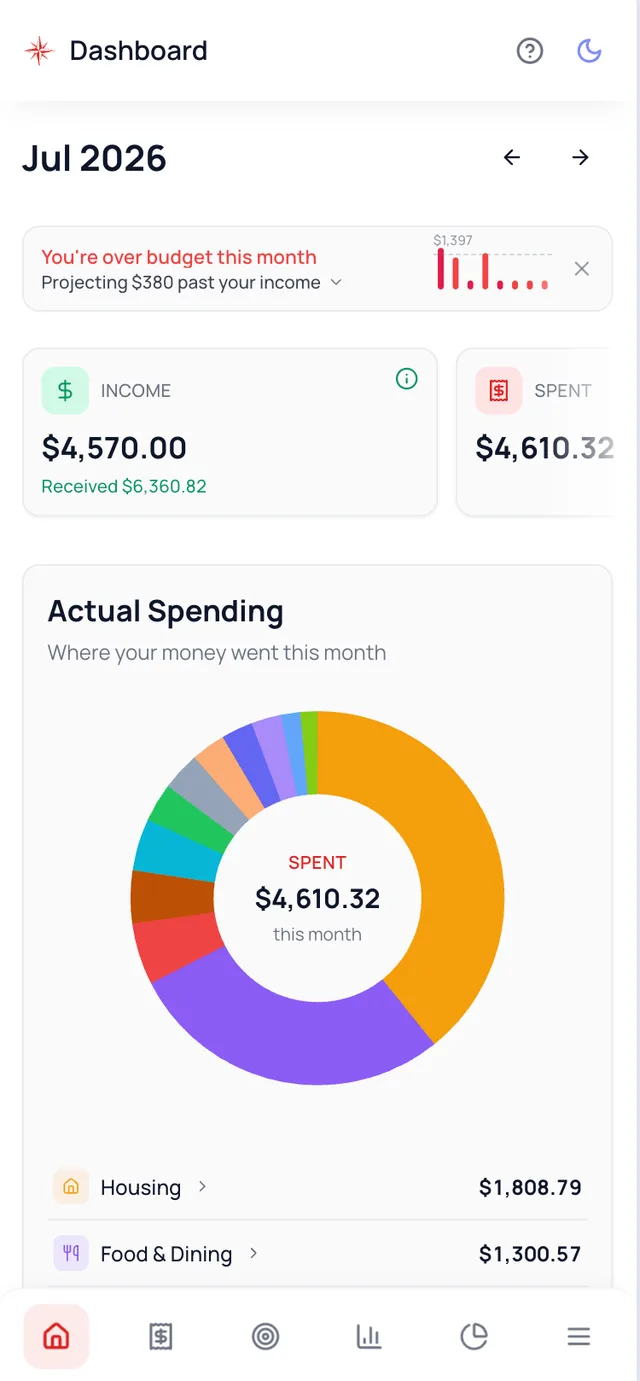
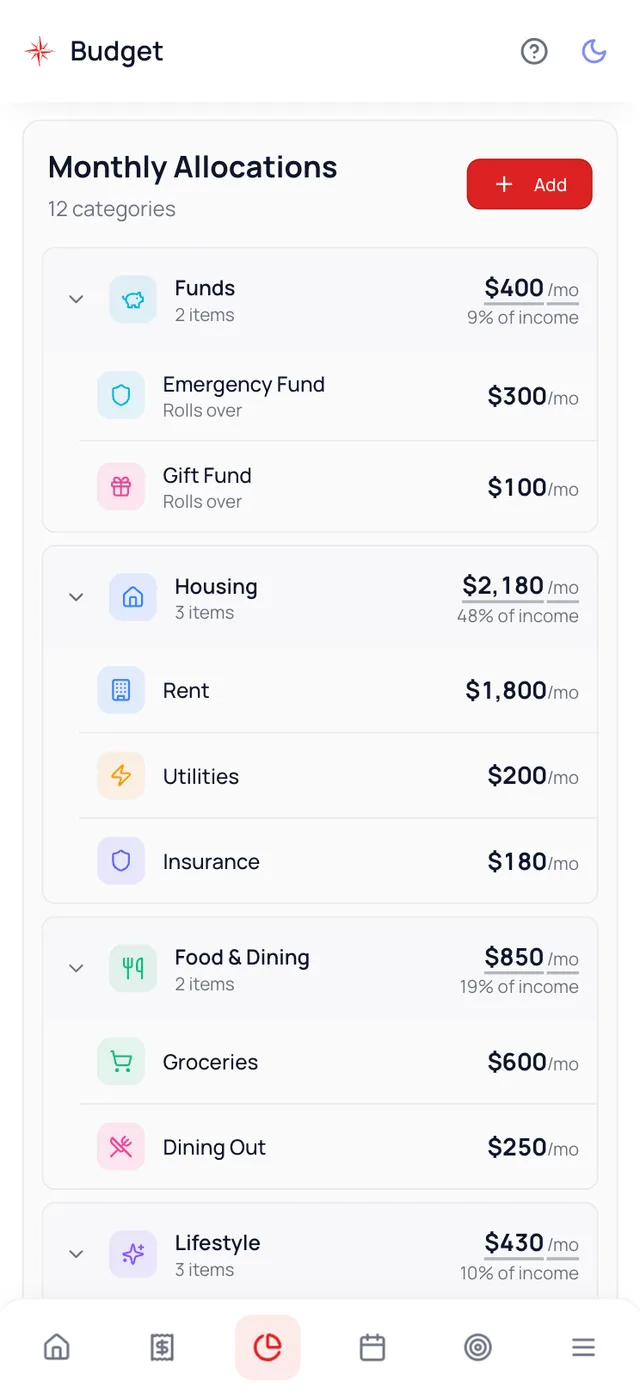
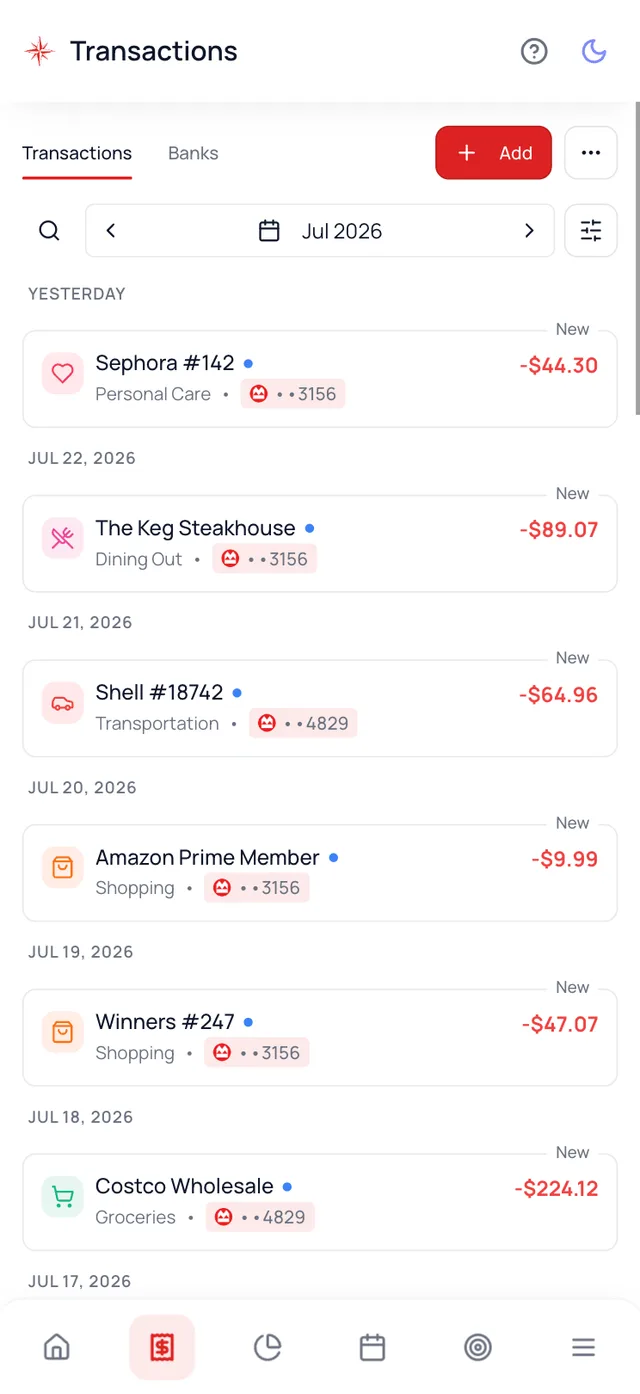
Simple Dashboard
See your entire budget at a glance. Clean, simple interface designed for beginners.
Why Most Beginners Give Up (And How to Not)
Here is the honest truth: most people who try to budget for the first time quit within two weeks. Not because they are bad with money, but because they picked the wrong tool or set unrealistic expectations.
The most common reason people quit is that they chose an app with a steep learning curve and got overwhelmed before seeing any benefit. YNAB, for example, is a capable budgeting tool, but it has its own methodology, four rules to learn, and a setup process that can take an hour. That is a lot to ask of someone who just wants to stop overspending on takeout.
The second reason is perfectionism. People set extremely detailed budgets with 25 categories, then feel like a failure when they go $3 over their coffee budget. Budgeting does not have to be perfect to work. Even a rough budget, one that you actually check, will change your relationship with money.
The habit-formation key
The third reason is the wrong framing. Budgeting is not about restricting yourself. It is about making deliberate choices. Every dollar you assign to a category is a decision. When you go over on dining, you are not failing; you are learning what your actual priorities are. That information is valuable.
The fix is simple: pick the easiest possible tool, start with just a few categories, and give yourself two to three months before judging results. The rest of this article helps you pick that tool.
What to Look for in a Beginner Budgeting App
Not every budgeting app is built with beginners in mind. Here are the factors that matter most when you are just starting out:
Fast setup
You should be tracking spending within 5 minutes of creating an account. If an app asks for your income, all your accounts, and financial goals before you can even see the dashboard, that is a red flag.
A real free tier
A 14-day trial is not a free tier. As a beginner, you need time to build the habit before you know if the app is worth paying for. Look for apps with no credit card required.
Simple category system
Some apps give you a blank slate; others come pre-loaded with a hundred categories. The best beginner apps let you start with a handful and expand later.
No required methodology
Zero-based budgeting is powerful, but it requires learning. As a beginner, you don't need to assign every dollar before the month starts. You need to track what you spend.
Flexible transaction entry
Beginners often prefer manual entry, since it keeps them conscious of each purchase. The app should support both manual logging and bank import so you can choose your level of involvement.
Some form of guidance
Whether it is in-app tips, a help center, or a built-in coach, having somewhere to turn when you are confused makes the difference between continuing and quitting.
Beginner-Friendliness Scores
We scored the top apps across five dimensions that matter specifically to beginners. The further out each line extends, the better that app performs in that area.
Scores are editorial assessments based on signup flow, documentation, free tier quality, and onboarding experience.
The 5 Best Budgeting Apps for Beginners in 2026
 1. Waypoint Budget
Free | Plus $7.99/mo | Pro $12.99/mo
Beginner Rating: 5/5
Waypoint Budget earns the top spot because it removes every possible barrier between a new user and their first tracked transaction. There is no methodology to learn, no required bank connection, and no trial countdown ticking in the background. You sign up, pick a few categories, and start.
The free tier is genuinely complete. You get unlimited manual transactions, all budget categories, receipt scanning, CSV import, unlimited history, and Smart Money Coach, a built-in assistant that answers budgeting questions (5 messages per day on the free plan). This alone makes Waypoint Budget stand out: you have help available when you are confused, without having to dig through a help center.
The dashboard is clean and unintimidating. It shows you how much you have budgeted, how much you have spent, and how much is left, with no charts you have to learn to interpret and no terminology to decode. It is the first budgeting app that feels like it was actually designed for someone who has never budgeted before.
When you are ready to add bank sync, Plus at $7.99/mo connects to Chase, Bank of America, Wells Fargo, Capital One, and thousands of other US institutions. Waypoint Budget connects through both Plaid and Flinks, so coverage does not depend on a single aggregator. Bank sync is a nice-to-have for beginners, not a requirement, and many people prefer manual entry while they are learning.
Pros
- Genuinely free, no credit card
- Smart Money Coach included free
- Manual + CSV + receipt entry
- No required bank connection
- Takes 5 minutes to set up
Cons
- Bank sync requires Plus plan
- Newer app, smaller community
 2. Goodbudget
Beginner Rating: 4/5
Goodbudget is a digital version of the envelope budgeting method: you divide your money into virtual envelopes (Groceries, Rent, Gas, etc.) at the start of each month, then spend from those envelopes. It is a tactile way to budget, and many beginners find it clicks intuitively.
The free tier gives you 10 regular plus 10 annual envelopes and one account, which is enough to start. It does not sync with your bank, so all transactions are manual, which is actually a feature for beginners who want to stay aware of every purchase. The paid plan ($10/mo or $80/yr) adds unlimited envelopes and syncing across devices.
Best for cash budgeters, people who get paid in cash, or anyone who wants a simple, visual method with no bank connection required.
 3. Simplifi by Quicken
Beginner Rating: 4/5
Simplifi by Quicken is the best mid-range option in 2026. Billed annually at about $47.88/yr on its persistent promo, it includes bank sync, spending plan, savings goals, and a watchlist for recurring bills. The interface is clean and modern, a big departure from Quicken's desktop legacy, and the onboarding is smooth enough that most beginners can get oriented in under ten minutes.
The downside is that there is no free tier and no monthly option: Simplifi is annual only, with a 30-day money-back guarantee rather than a trial. For a beginner who is still not sure if they will stick with budgeting, paying a year up front can be a barrier. But if you know you are ready to invest in the habit, Simplifi delivers solid value.
 4. YNAB (You Need A Budget)
Beginner Rating: 3/5
YNAB is a powerful budgeting app with a large, active community and a proven methodology built on four rules. For people who are serious about getting out of debt or fundamentally changing how they handle money, YNAB's structured approach is worth the investment of time it takes to learn.
For complete beginners, however, YNAB is a steep entry point. The zero-based approach requires you to assign every dollar before you spend it, which means a significant mental shift before you see results. The learning curve is real: expect to spend a few hours on tutorials and to feel confused for the first couple of weeks.
After the trial, YNAB costs $14.99/mo, the highest price of any app on this list. It is worth it if you get past the learning curve and stick with the method. But as a starting point for beginners who just want to know where their money is going, there are easier options.
 5. Copilot Money
Beginner Rating: 3/5
Copilot has a polished design and smooth bank sync. It is well-regarded among iPhone users who want a slick-looking app and do not mind paying for it. The transaction categorization is accurate and the spending overview is easy to understand.
The two limitations for beginners: it runs on iOS, Mac, and web with no Android app, and there is no free tier. At $13/mo with no way to try it without committing, it is a harder sell for someone who is not yet sure they will stick with budgeting. Best suited to iPhone users who are already sold on the idea of budgeting and want a polished experience.
A note on Mint
Getting Started in Under 5 Minutes
Here is exactly how to start with Waypoint Budget from scratch. No prior budgeting experience needed.
Create a free account
Go to waypointbudget.com and sign up. No credit card, no trial clock. The free tier does not expire.
Pick 3-5 categories to start
Do not try to cover everything at once. Start with your highest-spending categories: typically Rent/Mortgage, Groceries, Dining Out, and Transportation. You can add more later.
Set rough budget amounts
If you don't know how much you spend on groceries, guess. Your first budget is meant to be a baseline, not a perfect plan. You will adjust it after a few weeks of tracking.
Log your first transaction
Add something you spent money on today, even a coffee. This is the most important step. Once you have one transaction in, the app stops being abstract.
Check in once this week
Come back in a few days, add anything you missed, and look at how your spending compares to your budget. That is it. That is budgeting.
Tips for Your First Month
- Do not try to cut spending in month one; just track and learn your patterns
- If you miss a day, catch up when you can; the app does not expire
- Use Smart Money Coach when you have questions; it is there specifically for this
- After month one, review your category totals and adjust your budgets to match reality
Common Beginner Mistakes to Avoid
Starting with too many categories
Begin with 3-5 categories that cover 80% of your spending. Add more once the habit is established. A simple budget you check is better than a detailed one you abandon.
Budgeting net income instead of take-home pay
Always budget based on what actually lands in your bank account after taxes, not your gross salary. Using gross income will make every budget feel unachievable.
Setting unrealistically tight budgets
Your first budget should reflect what you actually spend, not what you wish you spent. Track first, then cut. If you budgeted $200 for dining and spent $350, set $350 as your baseline and work down from there.
Forgetting irregular expenses
Car registration, annual subscriptions, and holiday gifts are real expenses; they just don't happen every month. Divide them by 12 and add a category called "Irregular Expenses" or "Sinking Fund" so they don't blindside you.
Quitting after one bad month
Overspending in a category is not failure; it is data. Every month you track gives you more information about your real habits. Three months of imperfect tracking beats zero months of perfect planning.
Treating savings as optional
Even $10 per paycheck counts. The habit of setting money aside before spending it is more important than the amount, especially at the start. Budget for savings the same way you budget for groceries.
Comparison Table
| App | Beginner Rating | Free Tier | Setup Time | Learning Curve | Best For |
|---|---|---|---|---|---|
| Waypoint BudgetTop Pick | 5/5 | Forever free | ~5 min | Minimal | Complete beginners |
| Goodbudget | 4/5 | Free (limited) | ~10 min | Low | Cash / envelope fans |
| Simplifi | 4/5 | None (refund) | ~10 min | Low | Mid-range buyers |
| YNAB | 3/5 | 34-day trial | 45-90 min | Steep | Serious power users |
| Copilot | 3/5 | Trial only | ~15 min | Moderate | iPhone users only |
| Mint | N/A | N/A | N/A | N/A | Shut down in 2024 |
Quiz: Which App Matches Your Style?
Answer three quick questions and we will point you to the right starting point.
1. Have you ever used a budgeting app before?
2. What is your biggest money challenge?
3. How much time can you spend on budgeting per week?
Frequently Asked Questions
Ready to Start? It Takes 5 Minutes.
Waypoint Budget is free, requires no credit card, and does not expire. Set up three categories, log your first transaction, and you are budgeting.
Free forever. Upgrade only if you want bank sync.
Keep Reading
Disclaimer
This article is for informational and editorial purposes only and reflects the author's own testing and opinions. Waypoint Budget is our own product, and we describe every option as accurately as we can, including the cases where a competitor is the better fit. Waypoint Budget is not affiliated with, endorsed by, or sponsored by YNAB, Mint, Goodbudget, Copilot Money, Simplifi, and Quicken, or any other company named here. All trademarks, logos, and brand names are the property of their respective owners and are used for identification and editorial purposes only. Pricing, features, and availability change without notice, so verify current details with each provider before deciding. This is not financial advice.
You're in good company
Don't take our word for it. See what people are saying about us on Trustpilot.
Trusted by 10,000+ budgeters
Ed
Great app. Simple to use and very intuitive.
Brett Wareham
The WayPointBudget program, through both the web interface and the mobile interface, is much better than using plain Excel to manage a budget and is now our preferred method of budget tracking.
Adam Cabral
Very helpful budget tracker! Highly recommend.
Viona Smith
Fantastic app to use. Developers are super helpful, provide and take great honest feedback. Really trying to make this app even more amazing then it already is. So happy I found it.
T. D.
The program is great, but what sets it apart are two things: 1) When you need any questions answered, they answer by email within the same day. and 2) They are always upgrading their system with new features!
Ryan Plester
Great budgeting tool for less money than others. The dashboard is particularly insightful
Ayla Bee
A great replacement for MINT and more intuitive than MINT was!
Fargo6
what makes this a 5 star app is the few issues that arose or that I was confused about such as importing transactions and linking banks. I contacted the developer and they messaged back quickly that they implemented fix's for my issues and to retry it. this to me is a very active development team that cares about the product they are selling. 5 star for trust.
Jodi Harbarenko
What an incredible find Waypoint Budget is! I used MINT for well over a decade before it ended, and then switched to YNAB for a couple of years as there seemed to be nothing else available to Canadians. While I liked some aspects of YNAB, it was very expensive and was pretty frustrating to work with in some of its features. I stumbled on Waypoint after asking the internet if any new alternatives were around, and it suggested this great program. Not only is it Canadian, but the price is far better than YNAB, the features are more straightforward to work with (more like MINT used to be), and its founder and designer is incredibly supportive with any questions I have. He has responded right away to any questions or problems I am facing and always makes sure I have everything working as it should be. He is even open to new suggestions of features that I enjoyed in YNAB that are missing in Waypoint and is always improving his program with new changes! It's so amazing to see it evolving. I ended my YNAB subscription and am very happy with my experience thus far with Waypoint. I have the PRO version and have my banks connected to download transactions, and I love that categorizing is straightforward and the dashboard gives me a clear picture of what I've spent in each category and what remains. I know Jamal, the founder, is working with bank connections to make them easier to refresh, but the workaround he gave me is perfect and works like a charm. I give this budgeting program five stars and would say it is worth its value as a life-long budget geek--but also because it is a young Canadian software developer who brought it into being! Incredible program and very worth the trial... and subsequent subscription!
Kerem
Great budgeting app with very active development team! I've been using it for over 5 months and very happy with the user experience. The paid feature to use Plaid to sync bank transactions is worth considering on its own. Filters credit card payment and receive transactions well enough by itself and provides a lot of customization.
Shannon Talarico
So far so great!!! Coming from a different budgeting app to this one I am really happy with the layout and simplicity/intuitiveness of the various tabs and views. I like so many of the features and I'm happy to be supporting a Canadian company. I wish I didn't have to reconnect the banks so often but I understand that is a bank issue and not something within Waypoint's control. They make it easy to reconnect so that's good.
Jared Friesen
Great with Canadian bank. The user interface is great. Budget tool is perfect.
Tony S Pietromonaco
Great product and excellent customer service
Valerie
I'm a senior with a bit of bookkeeping experience from long ago. That's relevant because I am thrilled to bits that I have found Waypoint to be so easy to use. Of course, there is a learning curve, but between Waypoint themselves and ChatGPT, I've been able to navigate the whole thing. I highly recommend Waypoint -- it's designed for Canadians, which is huge for me, and designed with privacy integrity as well.
Seif Allaoua
Impressive, it really surpassed my expectations, and I am usually a difficult customer when it comes to technology solutions. As a computer engineer myself, and a two weeks customer, I can already tell that the team at WayPoint did a fantastic work on this, despite Canadian banks having legacy and conservative methods of interacting with third parties. Two weeks in, I have already started seeing improvement in the way I manage my finances and I am able to forecast what's coming in savings, spending and reaching long term financial goals. A true five star solution. Thank you
Ed
Great app. Simple to use and very intuitive.
Brett Wareham
The WayPointBudget program, through both the web interface and the mobile interface, is much better than using plain Excel to manage a budget and is now our preferred method of budget tracking.
Adam Cabral
Very helpful budget tracker! Highly recommend.
Viona Smith
Fantastic app to use. Developers are super helpful, provide and take great honest feedback. Really trying to make this app even more amazing then it already is. So happy I found it.
T. D.
The program is great, but what sets it apart are two things: 1) When you need any questions answered, they answer by email within the same day. and 2) They are always upgrading their system with new features!
Ryan Plester
Great budgeting tool for less money than others. The dashboard is particularly insightful
Ayla Bee
A great replacement for MINT and more intuitive than MINT was!
Fargo6
what makes this a 5 star app is the few issues that arose or that I was confused about such as importing transactions and linking banks. I contacted the developer and they messaged back quickly that they implemented fix's for my issues and to retry it. this to me is a very active development team that cares about the product they are selling. 5 star for trust.
Jodi Harbarenko
What an incredible find Waypoint Budget is! I used MINT for well over a decade before it ended, and then switched to YNAB for a couple of years as there seemed to be nothing else available to Canadians. While I liked some aspects of YNAB, it was very expensive and was pretty frustrating to work with in some of its features. I stumbled on Waypoint after asking the internet if any new alternatives were around, and it suggested this great program. Not only is it Canadian, but the price is far better than YNAB, the features are more straightforward to work with (more like MINT used to be), and its founder and designer is incredibly supportive with any questions I have. He has responded right away to any questions or problems I am facing and always makes sure I have everything working as it should be. He is even open to new suggestions of features that I enjoyed in YNAB that are missing in Waypoint and is always improving his program with new changes! It's so amazing to see it evolving. I ended my YNAB subscription and am very happy with my experience thus far with Waypoint. I have the PRO version and have my banks connected to download transactions, and I love that categorizing is straightforward and the dashboard gives me a clear picture of what I've spent in each category and what remains. I know Jamal, the founder, is working with bank connections to make them easier to refresh, but the workaround he gave me is perfect and works like a charm. I give this budgeting program five stars and would say it is worth its value as a life-long budget geek--but also because it is a young Canadian software developer who brought it into being! Incredible program and very worth the trial... and subsequent subscription!
Kerem
Great budgeting app with very active development team! I've been using it for over 5 months and very happy with the user experience. The paid feature to use Plaid to sync bank transactions is worth considering on its own. Filters credit card payment and receive transactions well enough by itself and provides a lot of customization.
Shannon Talarico
So far so great!!! Coming from a different budgeting app to this one I am really happy with the layout and simplicity/intuitiveness of the various tabs and views. I like so many of the features and I'm happy to be supporting a Canadian company. I wish I didn't have to reconnect the banks so often but I understand that is a bank issue and not something within Waypoint's control. They make it easy to reconnect so that's good.
Jared Friesen
Great with Canadian bank. The user interface is great. Budget tool is perfect.
Tony S Pietromonaco
Great product and excellent customer service
Valerie
I'm a senior with a bit of bookkeeping experience from long ago. That's relevant because I am thrilled to bits that I have found Waypoint to be so easy to use. Of course, there is a learning curve, but between Waypoint themselves and ChatGPT, I've been able to navigate the whole thing. I highly recommend Waypoint -- it's designed for Canadians, which is huge for me, and designed with privacy integrity as well.
Seif Allaoua
Impressive, it really surpassed my expectations, and I am usually a difficult customer when it comes to technology solutions. As a computer engineer myself, and a two weeks customer, I can already tell that the team at WayPoint did a fantastic work on this, despite Canadian banks having legacy and conservative methods of interacting with third parties. Two weeks in, I have already started seeing improvement in the way I manage my finances and I am able to forecast what's coming in savings, spending and reaching long term financial goals. A true five star solution. Thank you
Miguel Amigos
Easy to use, great layout and great way to keep track of things.
Vaibhav Turakhia
I have been on many budgeting apps, and so far this has been the most easiest and productive app for budgeting. Love it!
Max
I've been using Waypoint Budget mainly to manage a single account, and it handles everything far better than other competitors on the market. The built-in AI is honestly the best part. It makes tracking expenses and managing my account completely effortless. It saves so much manual work. Highly recommend if you want a clean app with AI that actually works!
Justin Miller
I've been looking for an effective tool since Mint shutdown. Although there's some app glitches still being sorted out, Waypoint is 100% the best option I've had available to me!
Noor Soultan
I looked and downloaded a lot of budgeting apps but this one is my fav. Its so easy to upload transaction my problem was connecting my bank to the app but now i just upload screen shots directly
Robert & Linda Johnstone
Waypoint is very user friendly with a clean and simple user interface. It's super helpful and gives great insight into household finances.
Barbara Whittaker
Wonderful experience excellent customer support and product!!
Mike
This app makes budgeting and tracking your money simple. It is intuitive and well developed. But what really makes this app head and shoulders above other apps is the developers desire to make it better. Not only did they reply back to questions I had about certain functions (I find it rare that app developers even respond to emails or messages), they made changes to the app to address these issues. Amazing!!
Byra Dineshkumar
As someone who is still a beginner when it comes to personal finance and budgeting, I've found Waypoint to be incredibly helpful in terms of making the process of tracking expenses and learning how to budget less daunting. I haven't upgraded to being able to sync banking transactions just yet, but even the process of manually entering my expenses, and having a clear visual of where I'm at and my goals has been empowering. I especially love the dashboard, the user interface is easy to navigate. Excited to continue to explore the different features Waypoint has to offer, and to see the platform grow as whole :)
Félix
I've been searching for the perfect budget app for years, and this one is even Canadian? Jackpot!
Mathieu Thériault
Great canadian financial planning application. Focuses on what's important, lots of potential and delivers on most of it, the rest will come as they are updating the application steadily on what matters most. Support is superb, quick, detailed, with troubleshooting steps and possible solutions as soon as the first message.
Johnny D.
It's a really great tool to get you started on your budgeting journey. Easy to understand and navigate, easy to customize. On top of that they have rapid customer service - when I had questions they would respond within 24h-48h. Impressive stuff! Keep doing what you're doing.
Chad
This is the best Canadian budgeting platform I've used so far. I've tried many other budgeting platforms, but always ended up going back to my spreadsheets-until now. the layout is clean and intuitive, and its incredibly simple and efficient to use. waypoint budget finally gives me everything i liked about with my spreadsheets, without the hassle.
Jacques Persoons
Finally find an app that suits all our needs. Quite Simple to use and very intuitive. I tried few other apps that were WAY TO COMPLICATED! It is also well adapted for Canadians. Customer service is also top of the line…
David Wicklund
Waypoint makes all aspects of budgeting and tracking expenses really easy and fun. The interface and features provide all the functionality that is required. Beautiful app.
Miguel Amigos
Easy to use, great layout and great way to keep track of things.
Vaibhav Turakhia
I have been on many budgeting apps, and so far this has been the most easiest and productive app for budgeting. Love it!
Max
I've been using Waypoint Budget mainly to manage a single account, and it handles everything far better than other competitors on the market. The built-in AI is honestly the best part. It makes tracking expenses and managing my account completely effortless. It saves so much manual work. Highly recommend if you want a clean app with AI that actually works!
Justin Miller
I've been looking for an effective tool since Mint shutdown. Although there's some app glitches still being sorted out, Waypoint is 100% the best option I've had available to me!
Noor Soultan
I looked and downloaded a lot of budgeting apps but this one is my fav. Its so easy to upload transaction my problem was connecting my bank to the app but now i just upload screen shots directly
Robert & Linda Johnstone
Waypoint is very user friendly with a clean and simple user interface. It's super helpful and gives great insight into household finances.
Barbara Whittaker
Wonderful experience excellent customer support and product!!
Mike
This app makes budgeting and tracking your money simple. It is intuitive and well developed. But what really makes this app head and shoulders above other apps is the developers desire to make it better. Not only did they reply back to questions I had about certain functions (I find it rare that app developers even respond to emails or messages), they made changes to the app to address these issues. Amazing!!
Byra Dineshkumar
As someone who is still a beginner when it comes to personal finance and budgeting, I've found Waypoint to be incredibly helpful in terms of making the process of tracking expenses and learning how to budget less daunting. I haven't upgraded to being able to sync banking transactions just yet, but even the process of manually entering my expenses, and having a clear visual of where I'm at and my goals has been empowering. I especially love the dashboard, the user interface is easy to navigate. Excited to continue to explore the different features Waypoint has to offer, and to see the platform grow as whole :)
Félix
I've been searching for the perfect budget app for years, and this one is even Canadian? Jackpot!
Mathieu Thériault
Great canadian financial planning application. Focuses on what's important, lots of potential and delivers on most of it, the rest will come as they are updating the application steadily on what matters most. Support is superb, quick, detailed, with troubleshooting steps and possible solutions as soon as the first message.
Johnny D.
It's a really great tool to get you started on your budgeting journey. Easy to understand and navigate, easy to customize. On top of that they have rapid customer service - when I had questions they would respond within 24h-48h. Impressive stuff! Keep doing what you're doing.
Chad
This is the best Canadian budgeting platform I've used so far. I've tried many other budgeting platforms, but always ended up going back to my spreadsheets-until now. the layout is clean and intuitive, and its incredibly simple and efficient to use. waypoint budget finally gives me everything i liked about with my spreadsheets, without the hassle.
Jacques Persoons
Finally find an app that suits all our needs. Quite Simple to use and very intuitive. I tried few other apps that were WAY TO COMPLICATED! It is also well adapted for Canadians. Customer service is also top of the line…
David Wicklund
Waypoint makes all aspects of budgeting and tracking expenses really easy and fun. The interface and features provide all the functionality that is required. Beautiful app.
David
Modern easy to use
De-anna Lea
I’m really liking waypoint. I have been using EveryDollar for the last 6 yrs and switched over last month. I like the analytics and set up has been fairly easy. Bit of a learning curve with rollover accounts but that’s user error I’m fairly sure. Really like all the options.
Khalil Redd
So far love the app!! It’s very efficient and does an excellent job of defining and labeling transactions. Anything it struggles with it flags and allows you to label it yourself and it remembers that for future similar transactions. Also it updates well
Maxime
Great interface and support for banks.
Alex Anna
In-depth analysis of my finance. Visual and easy to use. The best app.
Georgette
I have been looking for a way to budget as I look move towards retirement. I had tried YNAB, MINT, and a few others, but found them too complicated. Many of the apps have very dark interfaces which is off putting to me. When I came upon Waypoint Budget, the first thing I liked was the clean look of the website. It is easy to navigate between the different tools - budget, categories, transactions, etc. I was able to connect my bank easily. I now actually enjoy keeping track of my finances. The tool is great, but the service is even better. I had a couple of questions and when I wrote to the website creator, he connected with me within hours, sometimes minutes. He is awesome to work with and has even taken a suggestion I made to make the website even better. He is constantly striving to meet the needs of his clients. I gladly signed up for a year. Check out Waypoint Budget. You will not be disappointed.
Helene
The book mark version has proven to be so helpful in managing my money in a simple format that is easy to review and edit - along with subscribing to access one financial institution ($8/month CAD) to track my accounts - while the goals dashboard keeps me on track to paying down debt. Now they have finally created an app... (as of July 2026)... time will tell how that compares.
Kristin Gyuran
New to this app and love it. I really appreciate how you can interact with the creators to ask questions and recommend improvements. I find it easy to use and it syncs with my bank easily. Would highly recommend to anyone wishing to be more mindful with their money.
Stevie Baker
Waypoint is amazing. It's intuitive and easy to use. It allows you to set goals, track budget lines, group things together into categories and shows pie charts of the percentages of your budget. You can set goals and feel completely in control and informed. It's an excellent budgeting app the the customer service is second to none.
JD
Very easy to use. Developers are open to suggestions too. One of the best Canadian budgeting apps out there.
Sabine
If you’re looking for a Canadian-made budgeting solution, look no further. Waypoint is easy to use, even for a budgeting novice — the layout and functionality just make sense, and there’s an app as well. Best of all, if you ever have questions, you get a real human to help you out quickly. Thank you!
J.P. Métivier
Outstanding product built by an attentive and responsive team. By far the best budgeting tool I've tried. I wish they had a referral program because I'm already referring it to my close circle.
Ahmed H.
Just what I was looking for. Pulls transactions directly from my canadian bank accounts (works great for scotiabank and cibc), simple and clean design, ability to budget, track and compile reports on spending per category/month/year etc. Best such product out there for Canadians.
James W
One of the best budgeting apps I've used. Not unnecessarily invasive, functional, adaptable. Developing and updating faster than the issues can annoy you. Canadian made is also a huge bonus. Keep up the stellar work team!
Leon Gongola
the subscriptions tracking love how it automates and fills in by itself without having me to manually input each transaction every time good transaction tracking, I love the budgeting feature helps to see what payments are coming up and how much is you fixed total cost per month.
David
Modern easy to use
De-anna Lea
I’m really liking waypoint. I have been using EveryDollar for the last 6 yrs and switched over last month. I like the analytics and set up has been fairly easy. Bit of a learning curve with rollover accounts but that’s user error I’m fairly sure. Really like all the options.
Khalil Redd
So far love the app!! It’s very efficient and does an excellent job of defining and labeling transactions. Anything it struggles with it flags and allows you to label it yourself and it remembers that for future similar transactions. Also it updates well
Maxime
Great interface and support for banks.
Alex Anna
In-depth analysis of my finance. Visual and easy to use. The best app.
Georgette
I have been looking for a way to budget as I look move towards retirement. I had tried YNAB, MINT, and a few others, but found them too complicated. Many of the apps have very dark interfaces which is off putting to me. When I came upon Waypoint Budget, the first thing I liked was the clean look of the website. It is easy to navigate between the different tools - budget, categories, transactions, etc. I was able to connect my bank easily. I now actually enjoy keeping track of my finances. The tool is great, but the service is even better. I had a couple of questions and when I wrote to the website creator, he connected with me within hours, sometimes minutes. He is awesome to work with and has even taken a suggestion I made to make the website even better. He is constantly striving to meet the needs of his clients. I gladly signed up for a year. Check out Waypoint Budget. You will not be disappointed.
Helene
The book mark version has proven to be so helpful in managing my money in a simple format that is easy to review and edit - along with subscribing to access one financial institution ($8/month CAD) to track my accounts - while the goals dashboard keeps me on track to paying down debt. Now they have finally created an app... (as of July 2026)... time will tell how that compares.
Kristin Gyuran
New to this app and love it. I really appreciate how you can interact with the creators to ask questions and recommend improvements. I find it easy to use and it syncs with my bank easily. Would highly recommend to anyone wishing to be more mindful with their money.
Stevie Baker
Waypoint is amazing. It's intuitive and easy to use. It allows you to set goals, track budget lines, group things together into categories and shows pie charts of the percentages of your budget. You can set goals and feel completely in control and informed. It's an excellent budgeting app the the customer service is second to none.
JD
Very easy to use. Developers are open to suggestions too. One of the best Canadian budgeting apps out there.
Sabine
If you’re looking for a Canadian-made budgeting solution, look no further. Waypoint is easy to use, even for a budgeting novice — the layout and functionality just make sense, and there’s an app as well. Best of all, if you ever have questions, you get a real human to help you out quickly. Thank you!
J.P. Métivier
Outstanding product built by an attentive and responsive team. By far the best budgeting tool I've tried. I wish they had a referral program because I'm already referring it to my close circle.
Ahmed H.
Just what I was looking for. Pulls transactions directly from my canadian bank accounts (works great for scotiabank and cibc), simple and clean design, ability to budget, track and compile reports on spending per category/month/year etc. Best such product out there for Canadians.
James W
One of the best budgeting apps I've used. Not unnecessarily invasive, functional, adaptable. Developing and updating faster than the issues can annoy you. Canadian made is also a huge bonus. Keep up the stellar work team!
Leon Gongola
the subscriptions tracking love how it automates and fills in by itself without having me to manually input each transaction every time good transaction tracking, I love the budgeting feature helps to see what payments are coming up and how much is you fixed total cost per month.
Ed
Great app. Simple to use and very intuitive.
David
Modern easy to use
Vaibhav Turakhia
I have been on many budgeting apps, and so far this has been the most easiest and productive app for budgeting. Love it!
Adam Cabral
Very helpful budget tracker! Highly recommend.
Khalil Redd
So far love the app!! It’s very efficient and does an excellent job of defining and labeling transactions. Anything it struggles with it flags and allows you to label it yourself and it remembers that for future similar transactions. Also it updates well
Justin Miller
I've been looking for an effective tool since Mint shutdown. Although there's some app glitches still being sorted out, Waypoint is 100% the best option I've had available to me!
T. D.
The program is great, but what sets it apart are two things: 1) When you need any questions answered, they answer by email within the same day. and 2) They are always upgrading their system with new features!
Alex Anna
In-depth analysis of my finance. Visual and easy to use. The best app.
Robert & Linda Johnstone
Waypoint is very user friendly with a clean and simple user interface. It's super helpful and gives great insight into household finances.
Ayla Bee
A great replacement for MINT and more intuitive than MINT was!
Helene
The book mark version has proven to be so helpful in managing my money in a simple format that is easy to review and edit - along with subscribing to access one financial institution ($8/month CAD) to track my accounts - while the goals dashboard keeps me on track to paying down debt. Now they have finally created an app... (as of July 2026)... time will tell how that compares.
Mike
This app makes budgeting and tracking your money simple. It is intuitive and well developed. But what really makes this app head and shoulders above other apps is the developers desire to make it better. Not only did they reply back to questions I had about certain functions (I find it rare that app developers even respond to emails or messages), they made changes to the app to address these issues. Amazing!!
Jodi Harbarenko
What an incredible find Waypoint Budget is! I used MINT for well over a decade before it ended, and then switched to YNAB for a couple of years as there seemed to be nothing else available to Canadians. While I liked some aspects of YNAB, it was very expensive and was pretty frustrating to work with in some of its features. I stumbled on Waypoint after asking the internet if any new alternatives were around, and it suggested this great program. Not only is it Canadian, but the price is far better than YNAB, the features are more straightforward to work with (more like MINT used to be), and its founder and designer is incredibly supportive with any questions I have. He has responded right away to any questions or problems I am facing and always makes sure I have everything working as it should be. He is even open to new suggestions of features that I enjoyed in YNAB that are missing in Waypoint and is always improving his program with new changes! It's so amazing to see it evolving. I ended my YNAB subscription and am very happy with my experience thus far with Waypoint. I have the PRO version and have my banks connected to download transactions, and I love that categorizing is straightforward and the dashboard gives me a clear picture of what I've spent in each category and what remains. I know Jamal, the founder, is working with bank connections to make them easier to refresh, but the workaround he gave me is perfect and works like a charm. I give this budgeting program five stars and would say it is worth its value as a life-long budget geek--but also because it is a young Canadian software developer who brought it into being! Incredible program and very worth the trial... and subsequent subscription!
Stevie Baker
Waypoint is amazing. It's intuitive and easy to use. It allows you to set goals, track budget lines, group things together into categories and shows pie charts of the percentages of your budget. You can set goals and feel completely in control and informed. It's an excellent budgeting app the the customer service is second to none.
Félix
I've been searching for the perfect budget app for years, and this one is even Canadian? Jackpot!
Shannon Talarico
So far so great!!! Coming from a different budgeting app to this one I am really happy with the layout and simplicity/intuitiveness of the various tabs and views. I like so many of the features and I'm happy to be supporting a Canadian company. I wish I didn't have to reconnect the banks so often but I understand that is a bank issue and not something within Waypoint's control. They make it easy to reconnect so that's good.
Sabine
If you’re looking for a Canadian-made budgeting solution, look no further. Waypoint is easy to use, even for a budgeting novice — the layout and functionality just make sense, and there’s an app as well. Best of all, if you ever have questions, you get a real human to help you out quickly. Thank you!
Johnny D.
It's a really great tool to get you started on your budgeting journey. Easy to understand and navigate, easy to customize. On top of that they have rapid customer service - when I had questions they would respond within 24h-48h. Impressive stuff! Keep doing what you're doing.
Tony S Pietromonaco
Great product and excellent customer service
Ahmed H.
Just what I was looking for. Pulls transactions directly from my canadian bank accounts (works great for scotiabank and cibc), simple and clean design, ability to budget, track and compile reports on spending per category/month/year etc. Best such product out there for Canadians.
Jacques Persoons
Finally find an app that suits all our needs. Quite Simple to use and very intuitive. I tried few other apps that were WAY TO COMPLICATED! It is also well adapted for Canadians. Customer service is also top of the line…
Seif Allaoua
Impressive, it really surpassed my expectations, and I am usually a difficult customer when it comes to technology solutions. As a computer engineer myself, and a two weeks customer, I can already tell that the team at WayPoint did a fantastic work on this, despite Canadian banks having legacy and conservative methods of interacting with third parties. Two weeks in, I have already started seeing improvement in the way I manage my finances and I am able to forecast what's coming in savings, spending and reaching long term financial goals. A true five star solution. Thank you
Leon Gongola
the subscriptions tracking love how it automates and fills in by itself without having me to manually input each transaction every time good transaction tracking, I love the budgeting feature helps to see what payments are coming up and how much is you fixed total cost per month.
Ed
Great app. Simple to use and very intuitive.
David
Modern easy to use
Vaibhav Turakhia
I have been on many budgeting apps, and so far this has been the most easiest and productive app for budgeting. Love it!
Adam Cabral
Very helpful budget tracker! Highly recommend.
Khalil Redd
So far love the app!! It’s very efficient and does an excellent job of defining and labeling transactions. Anything it struggles with it flags and allows you to label it yourself and it remembers that for future similar transactions. Also it updates well
Justin Miller
I've been looking for an effective tool since Mint shutdown. Although there's some app glitches still being sorted out, Waypoint is 100% the best option I've had available to me!
T. D.
The program is great, but what sets it apart are two things: 1) When you need any questions answered, they answer by email within the same day. and 2) They are always upgrading their system with new features!
Alex Anna
In-depth analysis of my finance. Visual and easy to use. The best app.
Robert & Linda Johnstone
Waypoint is very user friendly with a clean and simple user interface. It's super helpful and gives great insight into household finances.
Ayla Bee
A great replacement for MINT and more intuitive than MINT was!
Helene
The book mark version has proven to be so helpful in managing my money in a simple format that is easy to review and edit - along with subscribing to access one financial institution ($8/month CAD) to track my accounts - while the goals dashboard keeps me on track to paying down debt. Now they have finally created an app... (as of July 2026)... time will tell how that compares.
Mike
This app makes budgeting and tracking your money simple. It is intuitive and well developed. But what really makes this app head and shoulders above other apps is the developers desire to make it better. Not only did they reply back to questions I had about certain functions (I find it rare that app developers even respond to emails or messages), they made changes to the app to address these issues. Amazing!!
Jodi Harbarenko
What an incredible find Waypoint Budget is! I used MINT for well over a decade before it ended, and then switched to YNAB for a couple of years as there seemed to be nothing else available to Canadians. While I liked some aspects of YNAB, it was very expensive and was pretty frustrating to work with in some of its features. I stumbled on Waypoint after asking the internet if any new alternatives were around, and it suggested this great program. Not only is it Canadian, but the price is far better than YNAB, the features are more straightforward to work with (more like MINT used to be), and its founder and designer is incredibly supportive with any questions I have. He has responded right away to any questions or problems I am facing and always makes sure I have everything working as it should be. He is even open to new suggestions of features that I enjoyed in YNAB that are missing in Waypoint and is always improving his program with new changes! It's so amazing to see it evolving. I ended my YNAB subscription and am very happy with my experience thus far with Waypoint. I have the PRO version and have my banks connected to download transactions, and I love that categorizing is straightforward and the dashboard gives me a clear picture of what I've spent in each category and what remains. I know Jamal, the founder, is working with bank connections to make them easier to refresh, but the workaround he gave me is perfect and works like a charm. I give this budgeting program five stars and would say it is worth its value as a life-long budget geek--but also because it is a young Canadian software developer who brought it into being! Incredible program and very worth the trial... and subsequent subscription!
Stevie Baker
Waypoint is amazing. It's intuitive and easy to use. It allows you to set goals, track budget lines, group things together into categories and shows pie charts of the percentages of your budget. You can set goals and feel completely in control and informed. It's an excellent budgeting app the the customer service is second to none.
Félix
I've been searching for the perfect budget app for years, and this one is even Canadian? Jackpot!
Shannon Talarico
So far so great!!! Coming from a different budgeting app to this one I am really happy with the layout and simplicity/intuitiveness of the various tabs and views. I like so many of the features and I'm happy to be supporting a Canadian company. I wish I didn't have to reconnect the banks so often but I understand that is a bank issue and not something within Waypoint's control. They make it easy to reconnect so that's good.
Sabine
If you’re looking for a Canadian-made budgeting solution, look no further. Waypoint is easy to use, even for a budgeting novice — the layout and functionality just make sense, and there’s an app as well. Best of all, if you ever have questions, you get a real human to help you out quickly. Thank you!
Johnny D.
It's a really great tool to get you started on your budgeting journey. Easy to understand and navigate, easy to customize. On top of that they have rapid customer service - when I had questions they would respond within 24h-48h. Impressive stuff! Keep doing what you're doing.
Tony S Pietromonaco
Great product and excellent customer service
Ahmed H.
Just what I was looking for. Pulls transactions directly from my canadian bank accounts (works great for scotiabank and cibc), simple and clean design, ability to budget, track and compile reports on spending per category/month/year etc. Best such product out there for Canadians.
Jacques Persoons
Finally find an app that suits all our needs. Quite Simple to use and very intuitive. I tried few other apps that were WAY TO COMPLICATED! It is also well adapted for Canadians. Customer service is also top of the line…
Seif Allaoua
Impressive, it really surpassed my expectations, and I am usually a difficult customer when it comes to technology solutions. As a computer engineer myself, and a two weeks customer, I can already tell that the team at WayPoint did a fantastic work on this, despite Canadian banks having legacy and conservative methods of interacting with third parties. Two weeks in, I have already started seeing improvement in the way I manage my finances and I am able to forecast what's coming in savings, spending and reaching long term financial goals. A true five star solution. Thank you
Leon Gongola
the subscriptions tracking love how it automates and fills in by itself without having me to manually input each transaction every time good transaction tracking, I love the budgeting feature helps to see what payments are coming up and how much is you fixed total cost per month.
Miguel Amigos
Easy to use, great layout and great way to keep track of things.
Brett Wareham
The WayPointBudget program, through both the web interface and the mobile interface, is much better than using plain Excel to manage a budget and is now our preferred method of budget tracking.
De-anna Lea
I’m really liking waypoint. I have been using EveryDollar for the last 6 yrs and switched over last month. I like the analytics and set up has been fairly easy. Bit of a learning curve with rollover accounts but that’s user error I’m fairly sure. Really like all the options.
Max
I've been using Waypoint Budget mainly to manage a single account, and it handles everything far better than other competitors on the market. The built-in AI is honestly the best part. It makes tracking expenses and managing my account completely effortless. It saves so much manual work. Highly recommend if you want a clean app with AI that actually works!
Viona Smith
Fantastic app to use. Developers are super helpful, provide and take great honest feedback. Really trying to make this app even more amazing then it already is. So happy I found it.
Maxime
Great interface and support for banks.
Noor Soultan
I looked and downloaded a lot of budgeting apps but this one is my fav. Its so easy to upload transaction my problem was connecting my bank to the app but now i just upload screen shots directly
Ryan Plester
Great budgeting tool for less money than others. The dashboard is particularly insightful
Georgette
I have been looking for a way to budget as I look move towards retirement. I had tried YNAB, MINT, and a few others, but found them too complicated. Many of the apps have very dark interfaces which is off putting to me. When I came upon Waypoint Budget, the first thing I liked was the clean look of the website. It is easy to navigate between the different tools - budget, categories, transactions, etc. I was able to connect my bank easily. I now actually enjoy keeping track of my finances. The tool is great, but the service is even better. I had a couple of questions and when I wrote to the website creator, he connected with me within hours, sometimes minutes. He is awesome to work with and has even taken a suggestion I made to make the website even better. He is constantly striving to meet the needs of his clients. I gladly signed up for a year. Check out Waypoint Budget. You will not be disappointed.
Barbara Whittaker
Wonderful experience excellent customer support and product!!
Fargo6
what makes this a 5 star app is the few issues that arose or that I was confused about such as importing transactions and linking banks. I contacted the developer and they messaged back quickly that they implemented fix's for my issues and to retry it. this to me is a very active development team that cares about the product they are selling. 5 star for trust.
Kristin Gyuran
New to this app and love it. I really appreciate how you can interact with the creators to ask questions and recommend improvements. I find it easy to use and it syncs with my bank easily. Would highly recommend to anyone wishing to be more mindful with their money.
Byra Dineshkumar
As someone who is still a beginner when it comes to personal finance and budgeting, I've found Waypoint to be incredibly helpful in terms of making the process of tracking expenses and learning how to budget less daunting. I haven't upgraded to being able to sync banking transactions just yet, but even the process of manually entering my expenses, and having a clear visual of where I'm at and my goals has been empowering. I especially love the dashboard, the user interface is easy to navigate. Excited to continue to explore the different features Waypoint has to offer, and to see the platform grow as whole :)
Kerem
Great budgeting app with very active development team! I've been using it for over 5 months and very happy with the user experience. The paid feature to use Plaid to sync bank transactions is worth considering on its own. Filters credit card payment and receive transactions well enough by itself and provides a lot of customization.
JD
Very easy to use. Developers are open to suggestions too. One of the best Canadian budgeting apps out there.
Mathieu Thériault
Great canadian financial planning application. Focuses on what's important, lots of potential and delivers on most of it, the rest will come as they are updating the application steadily on what matters most. Support is superb, quick, detailed, with troubleshooting steps and possible solutions as soon as the first message.
Jared Friesen
Great with Canadian bank. The user interface is great. Budget tool is perfect.
J.P. Métivier
Outstanding product built by an attentive and responsive team. By far the best budgeting tool I've tried. I wish they had a referral program because I'm already referring it to my close circle.
Chad
This is the best Canadian budgeting platform I've used so far. I've tried many other budgeting platforms, but always ended up going back to my spreadsheets-until now. the layout is clean and intuitive, and its incredibly simple and efficient to use. waypoint budget finally gives me everything i liked about with my spreadsheets, without the hassle.
Valerie
I'm a senior with a bit of bookkeeping experience from long ago. That's relevant because I am thrilled to bits that I have found Waypoint to be so easy to use. Of course, there is a learning curve, but between Waypoint themselves and ChatGPT, I've been able to navigate the whole thing. I highly recommend Waypoint -- it's designed for Canadians, which is huge for me, and designed with privacy integrity as well.
James W
One of the best budgeting apps I've used. Not unnecessarily invasive, functional, adaptable. Developing and updating faster than the issues can annoy you. Canadian made is also a huge bonus. Keep up the stellar work team!
David Wicklund
Waypoint makes all aspects of budgeting and tracking expenses really easy and fun. The interface and features provide all the functionality that is required. Beautiful app.
Miguel Amigos
Easy to use, great layout and great way to keep track of things.
Brett Wareham
The WayPointBudget program, through both the web interface and the mobile interface, is much better than using plain Excel to manage a budget and is now our preferred method of budget tracking.
De-anna Lea
I’m really liking waypoint. I have been using EveryDollar for the last 6 yrs and switched over last month. I like the analytics and set up has been fairly easy. Bit of a learning curve with rollover accounts but that’s user error I’m fairly sure. Really like all the options.
Max
I've been using Waypoint Budget mainly to manage a single account, and it handles everything far better than other competitors on the market. The built-in AI is honestly the best part. It makes tracking expenses and managing my account completely effortless. It saves so much manual work. Highly recommend if you want a clean app with AI that actually works!
Viona Smith
Fantastic app to use. Developers are super helpful, provide and take great honest feedback. Really trying to make this app even more amazing then it already is. So happy I found it.
Maxime
Great interface and support for banks.
Noor Soultan
I looked and downloaded a lot of budgeting apps but this one is my fav. Its so easy to upload transaction my problem was connecting my bank to the app but now i just upload screen shots directly
Ryan Plester
Great budgeting tool for less money than others. The dashboard is particularly insightful
Georgette
I have been looking for a way to budget as I look move towards retirement. I had tried YNAB, MINT, and a few others, but found them too complicated. Many of the apps have very dark interfaces which is off putting to me. When I came upon Waypoint Budget, the first thing I liked was the clean look of the website. It is easy to navigate between the different tools - budget, categories, transactions, etc. I was able to connect my bank easily. I now actually enjoy keeping track of my finances. The tool is great, but the service is even better. I had a couple of questions and when I wrote to the website creator, he connected with me within hours, sometimes minutes. He is awesome to work with and has even taken a suggestion I made to make the website even better. He is constantly striving to meet the needs of his clients. I gladly signed up for a year. Check out Waypoint Budget. You will not be disappointed.
Barbara Whittaker
Wonderful experience excellent customer support and product!!
Fargo6
what makes this a 5 star app is the few issues that arose or that I was confused about such as importing transactions and linking banks. I contacted the developer and they messaged back quickly that they implemented fix's for my issues and to retry it. this to me is a very active development team that cares about the product they are selling. 5 star for trust.
Kristin Gyuran
New to this app and love it. I really appreciate how you can interact with the creators to ask questions and recommend improvements. I find it easy to use and it syncs with my bank easily. Would highly recommend to anyone wishing to be more mindful with their money.
Byra Dineshkumar
As someone who is still a beginner when it comes to personal finance and budgeting, I've found Waypoint to be incredibly helpful in terms of making the process of tracking expenses and learning how to budget less daunting. I haven't upgraded to being able to sync banking transactions just yet, but even the process of manually entering my expenses, and having a clear visual of where I'm at and my goals has been empowering. I especially love the dashboard, the user interface is easy to navigate. Excited to continue to explore the different features Waypoint has to offer, and to see the platform grow as whole :)
Kerem
Great budgeting app with very active development team! I've been using it for over 5 months and very happy with the user experience. The paid feature to use Plaid to sync bank transactions is worth considering on its own. Filters credit card payment and receive transactions well enough by itself and provides a lot of customization.
JD
Very easy to use. Developers are open to suggestions too. One of the best Canadian budgeting apps out there.
Mathieu Thériault
Great canadian financial planning application. Focuses on what's important, lots of potential and delivers on most of it, the rest will come as they are updating the application steadily on what matters most. Support is superb, quick, detailed, with troubleshooting steps and possible solutions as soon as the first message.
Jared Friesen
Great with Canadian bank. The user interface is great. Budget tool is perfect.
J.P. Métivier
Outstanding product built by an attentive and responsive team. By far the best budgeting tool I've tried. I wish they had a referral program because I'm already referring it to my close circle.
Chad
This is the best Canadian budgeting platform I've used so far. I've tried many other budgeting platforms, but always ended up going back to my spreadsheets-until now. the layout is clean and intuitive, and its incredibly simple and efficient to use. waypoint budget finally gives me everything i liked about with my spreadsheets, without the hassle.
Valerie
I'm a senior with a bit of bookkeeping experience from long ago. That's relevant because I am thrilled to bits that I have found Waypoint to be so easy to use. Of course, there is a learning curve, but between Waypoint themselves and ChatGPT, I've been able to navigate the whole thing. I highly recommend Waypoint -- it's designed for Canadians, which is huge for me, and designed with privacy integrity as well.
James W
One of the best budgeting apps I've used. Not unnecessarily invasive, functional, adaptable. Developing and updating faster than the issues can annoy you. Canadian made is also a huge bonus. Keep up the stellar work team!
David Wicklund
Waypoint makes all aspects of budgeting and tracking expenses really easy and fun. The interface and features provide all the functionality that is required. Beautiful app.
4.6/5 on Trustpilot